



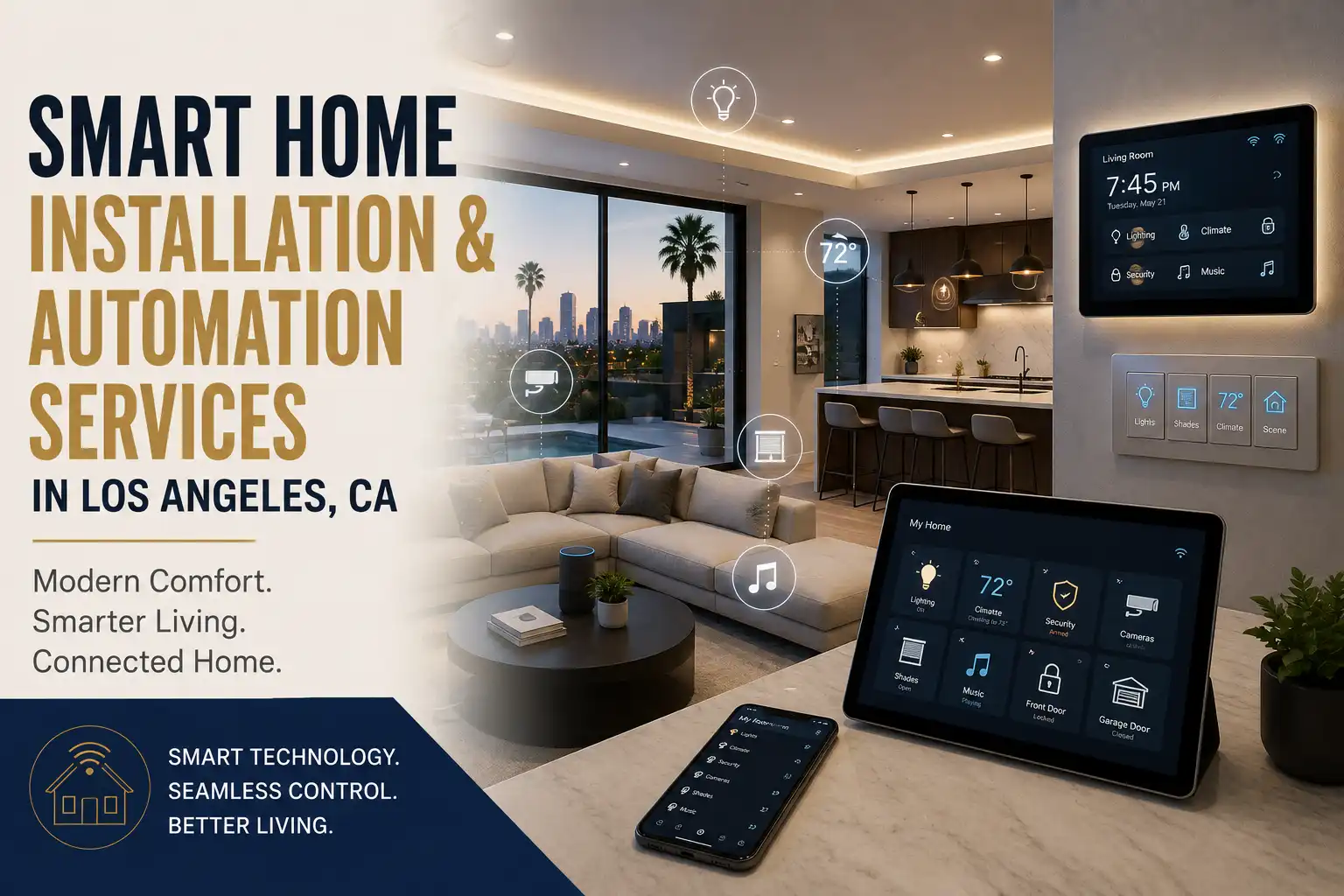
Smart home installation in Los Angeles, CA gives homeowners a more convenient way to manage lighting, temperature, security, entertainment, access, and energy use. Instead of controlling every device separately, a professionally planned automation system can connect important features of your home through a smartphone, tablet, wall-mounted panel, or compatible voice assistant.
Concierge Home Remodeling provides customized smart home installation and automation services for homeowners who want their technology to feel simple, secure, and naturally integrated into their living space. Whether you are upgrading an existing property or incorporating technology into a larger renovation, the system can be designed around your lifestyle, priorities, and future needs.
What Is a Smart Home Automation System?
A smart home automation system connects compatible devices and allows them to communicate through a central platform. Depending on the selected features, homeowners may control individual devices manually, create automated schedules, or activate multiple functions with a single command.
For example, an evening routine may lower the window shades, adjust the thermostat, lock exterior doors, activate selected security cameras, and reduce the brightness of the interior lights. A morning routine may gradually increase bedroom lighting, adjust the indoor temperature, and open automated shades.
The goal is not to fill the house with unnecessary gadgets. A well-designed system should make everyday activities easier while giving the homeowner clear control over how each feature operates.
Smart Home Features Available for Los Angeles Homes
Every property and household is different. Your smart home system can therefore be customized around the technologies that provide the most practical value.
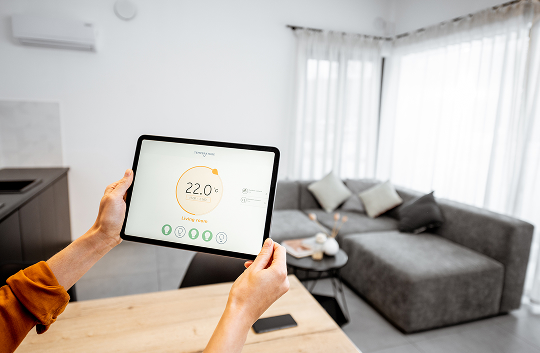
Smart Lighting and Automated Scenes
Smart lighting allows you to control individual fixtures, groups of lights, or the entire home from a connected device. You can create lighting scenes for entertaining, relaxing, working, watching television, cooking, or preparing for bedtime.
Motion sensors and automated schedules may also be used in entryways, hallways, closets, bathrooms, and exterior areas. This reduces the need to search for switches and helps prevent lights from remaining on unnecessarily.
Smart Thermostats and Climate Control
Connected climate-control systems help homeowners manage indoor comfort through customized schedules and remote adjustments. You may change the temperature before returning home, create different settings for sleeping and daytime use, or coordinate climate control with occupancy.
In larger homes, compatible zoning solutions can provide more focused control over different areas of the property.
Smart Security Cameras and Monitoring
A smart security system may include indoor or outdoor cameras, video doorbells, motion detection, entry sensors, and remote notifications. Homeowners can review selected areas of the property and receive alerts when configured activity is detected.
Professional planning is important because camera placement, network performance, privacy settings, lighting conditions, and recording preferences can affect how effectively the system operates.
Smart Locks and Entry Systems
Smart locks provide flexible access without depending entirely on traditional keys. Homeowners may create temporary or permanent access codes for relatives, trusted service providers, or guests while retaining control over when those credentials are active.
Depending on the selected equipment, the homeowner may also receive lock-status notifications or confirm remotely whether an exterior door is secured.
Whole-Home Audio and Entertainment
A connected entertainment system can distribute music, television audio, or other media across selected rooms. Individual household members may listen to different content in separate zones, while shared spaces can be synchronized when desired.
Speakers, televisions, streaming devices, network equipment, and control interfaces should be planned together so the final setup feels organized rather than complicated.
Automated Window Shades
Motorized shades may be programmed around time of day, sunlight, privacy, or room use. They can help manage glare, support indoor comfort, and create a polished environment without requiring manual adjustment throughout the day.
Wireless Versus Hardwired Smart Home Installation
Wireless technology can be useful when upgrading a finished home because it may reduce the amount of invasive installation work. However, wireless performance depends on signal strength, device compatibility, network capacity, battery maintenance, and the construction of the property.
Hardwired systems can provide dependable communication for certain security, networking, audiovisual, lighting, and automation applications. They are often easier to incorporate when walls are already open during remodeling or new construction.
Many properties benefit from a hybrid design that combines wireless flexibility with hardwired infrastructure in important areas. The correct approach depends on the home, project scope, selected devices, and long-term automation goals.
Integrating Smart Technology During a Home Remodel
The remodeling stage is an ideal time to plan wiring, control locations, network access points, sensors, speakers, cameras, outlets, and equipment storage. These decisions can be addressed before walls are closed and finishes are installed.
Homeowners planning a kitchen remodeling project may integrate connected lighting, automated shades, voice-controlled features, smart appliances, entertainment, and climate controls into the new layout.
Technology can also be coordinated with cabinetry and interior design so switches, displays, speakers, charging locations, and control panels do not appear randomly placed.
Use 3D Design to Plan Smart Home Features
Smart technology works best when it is planned as part of the overall home design. Concierge Home Remodeling’s 3D design service can help homeowners visualize room layouts, lighting placement, wall-mounted controls, entertainment features, and other remodeling details before construction begins.
Reviewing the space visually may help identify better locations for lighting, televisions, speakers, shades, security devices, charging stations, and smart control panels. It also makes it easier to coordinate technology with furniture placement and architectural features.
Benefits of Professional Smart Home Installation
Better Device Compatibility
Not every connected product communicates through the same platform or protocol. Professional planning helps reduce the risk of purchasing devices that cannot work together effectively.
More Reliable Network Performance
Smart home devices depend heavily on the home network. Proper router placement, wireless coverage, equipment capacity, and secure configuration are essential for consistent performance.
Simpler Everyday Control
A successful system should not require homeowners to open several different applications for routine tasks. Compatible technologies can be organized into a more intuitive control experience.
Improved Security Configuration
Smart devices should be installed with secure passwords, updated software, appropriate user permissions, and carefully selected remote-access settings.
Future Scalability
A well-planned system can leave room for additional devices, expanded coverage, new rooms, or future technology upgrades.
Our Smart Home Installation Process
1. Consultation and Needs Assessment
The process begins by identifying your most important goals. These may include security, comfort, convenience, entertainment, accessibility, energy management, or a combination of priorities.
2. Property and Network Evaluation
The home layout, existing devices, electrical conditions, network coverage, and remodeling plans are reviewed to help determine the appropriate installation approach.
3. Customized System Planning
A customized plan is developed around device locations, control preferences, compatibility, infrastructure, and potential future expansion.
4. Installation and Configuration
Selected devices are installed, connected, organized, and configured according to the approved project plan.
5. Testing and Homeowner Orientation
The system is tested to confirm that connected features respond properly. Homeowners are then shown how to operate routines, applications, controls, and essential settings.
Frequently Asked Questions
Can smart technology be installed in an existing Los Angeles home?
Yes. Many smart home devices can be added to an existing property. The installation approach will depend on the home’s wiring, network coverage, construction, current equipment, and the technologies being installed.
Can I control my smart home while I am away?
Many connected systems support remote access through a secure smartphone or tablet application. Available features depend on the equipment and platform selected.
Will my smart home still work if the internet goes down?
Some features may continue to function locally, while others require an active internet connection. This should be evaluated during system planning, especially for essential security and access functions.
Can I add more smart devices later?
Yes, provided the original system is designed with compatible equipment, adequate network capacity, and future expansion in mind.
Start Your Los Angeles Smart Home Project
Professional smart home installation in Los Angeles, CA can transform disconnected devices into a coordinated home environment. With thoughtful planning, reliable installation, and easy-to-understand controls, your technology can support everyday comfort, security, and convenience without becoming difficult to manage.
Request a Smart Home Consultation
For additional renovation ideas, technology guidance, and home improvement resources, read more articles on the Concierge Home Remodeling blog.