



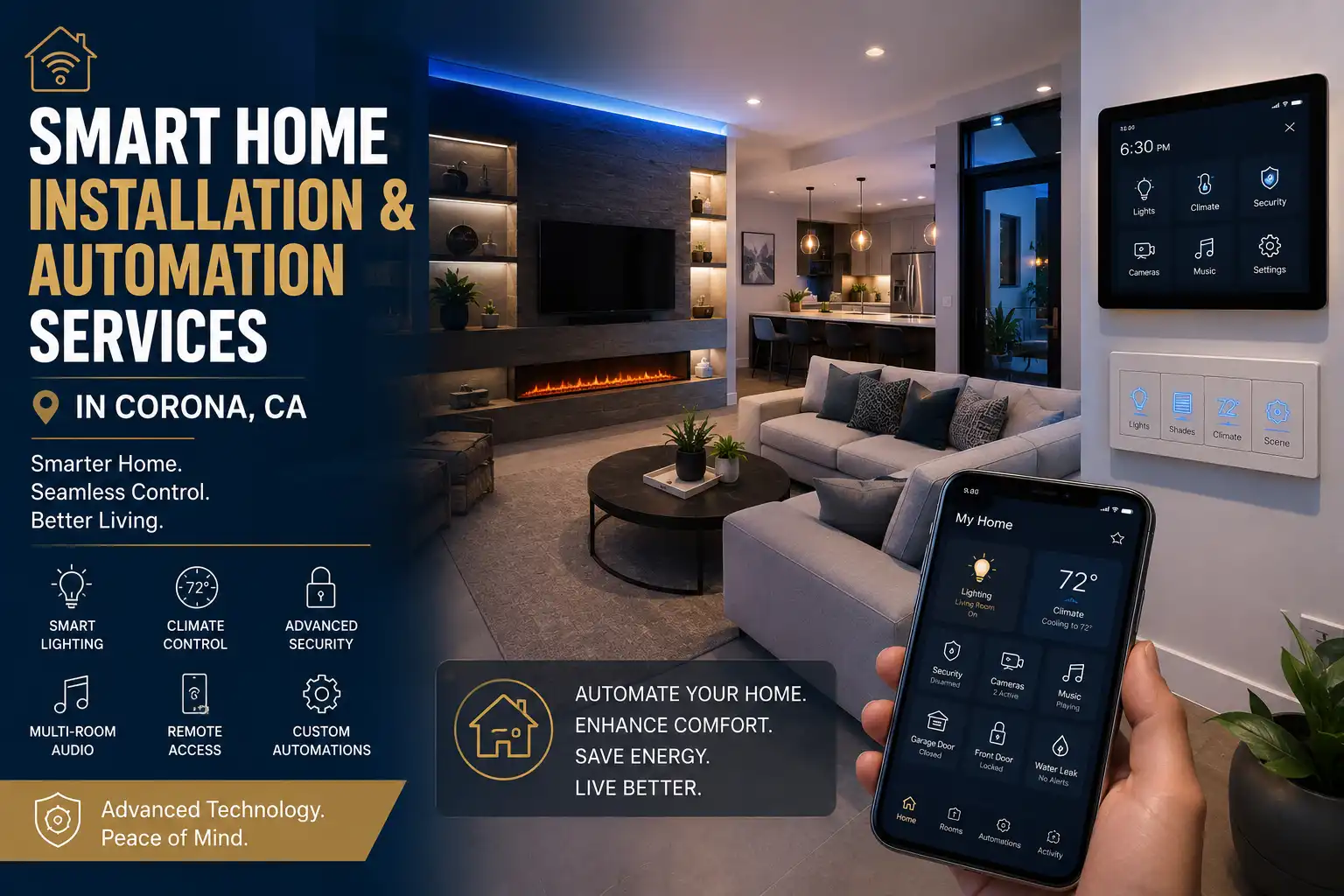
Smart home installation in Corona, CA can help homeowners manage security, lighting, climate, entertainment, window shades, and entry systems through one connected environment. The technology may be controlled from a smartphone, tablet, compatible voice assistant, wall-mounted panel, customized schedule, or automated scene.
Concierge Home Remodeling offers customized smart home installation and automation services that can be incorporated into an existing property or planned as part of a larger home renovation. The system is designed around the homeowner’s priorities instead of using the same combination of devices for every project.
What Can Smart Home Technology Do?
A smart home system allows compatible devices to communicate and respond according to homeowner preferences. Some devices may be controlled individually, while others can be grouped into scenes or routines.
A “Good Night” scene, for example, might turn off common-area lighting, lower selected shades, confirm that exterior doors are locked, adjust the thermostat, and activate selected security settings.
A “Welcome Home” routine may illuminate the entryway, adjust the indoor temperature, activate preferred music, and prepare frequently used rooms. The exact functions depend on the selected technology and system configuration.
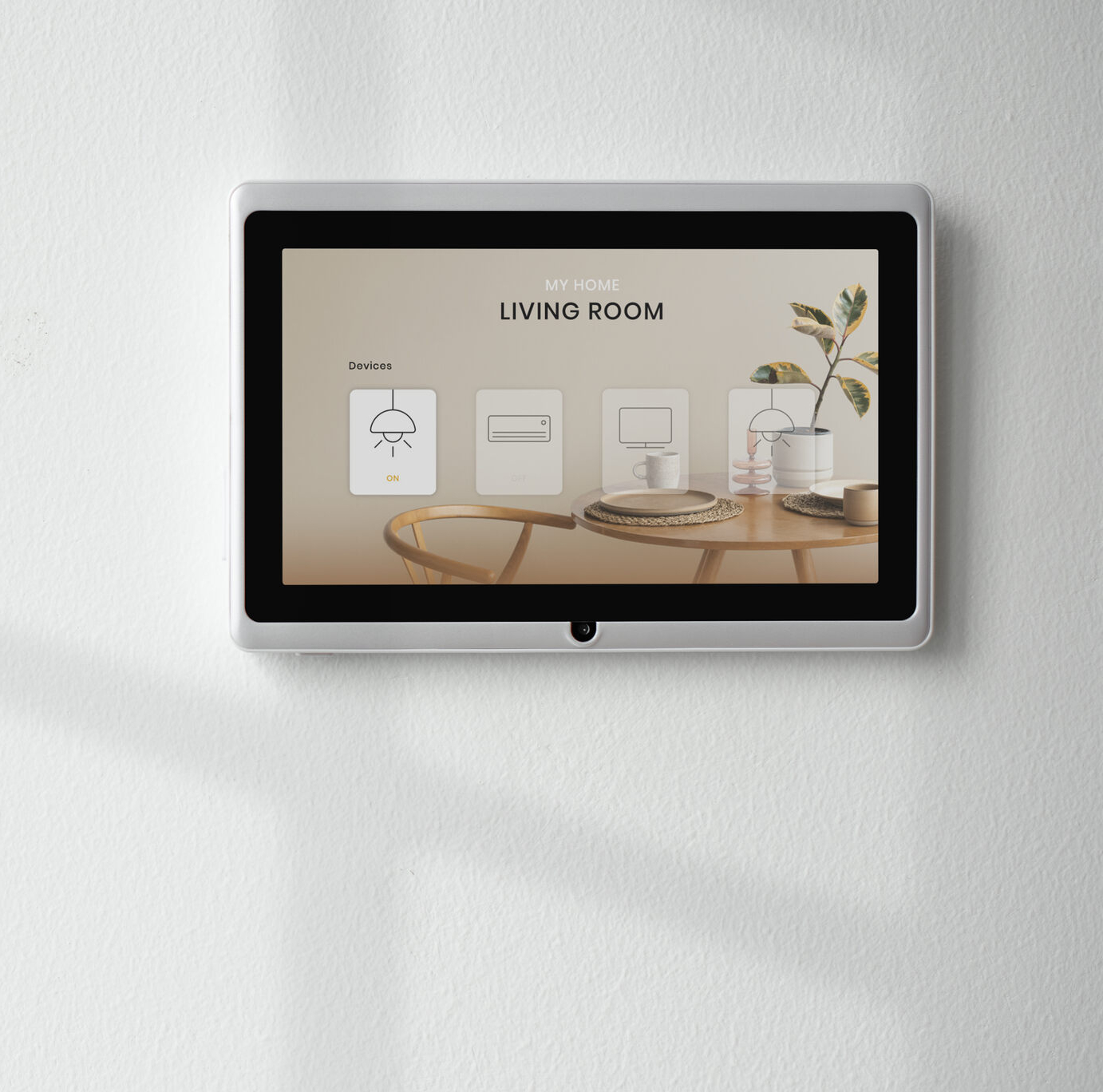
Popular Smart Home Upgrades for Corona Homeowners
Connected Lighting Controls
Smart lighting can provide control over brightness, fixture groups, scheduled operation, and customized scenes. Homeowners may coordinate lighting with room use, natural light, time of day, occupancy, or security preferences.
Automated lighting can be particularly useful in entrances, hallways, stairways, kitchens, bathrooms, bedrooms, garages, patios, and exterior pathways.
Smart Thermostats and Comfort Management
Connected thermostats allow homeowners to manage compatible heating and cooling equipment more conveniently. Temperature settings can be adjusted remotely or scheduled around sleeping, working, travel, and normal occupancy.
Appropriate climate-control planning may also involve automated shades, ceiling fans, room zoning, and occupancy information, depending on the property and selected equipment.
Smart Cameras and Security Sensors
Connected security options may include video doorbells, exterior cameras, interior cameras, motion sensors, window or door sensors, and mobile notifications.
Equipment placement should be planned carefully to provide useful coverage while respecting privacy. The installation should also consider network connectivity, lighting, electrical access, recording preferences, and user permissions.
Smart Door Locks and Access Management
Smart locks can help homeowners manage access through digital credentials rather than relying only on physical keys. Temporary codes may be created for guests, relatives, service providers, or other approved visitors.
Some systems may also provide activity notifications and remote lock-status information, depending on the product and platform.
Whole-Home Entertainment
Integrated entertainment systems can connect televisions, speakers, streaming devices, and other compatible equipment. Music may be distributed throughout the property or controlled separately in individual rooms.
Professional installation can help reduce visible cables, organize equipment, improve control, and coordinate entertainment features with the interior design.
Smart Garage and Exterior Features
Connected garage controls may allow homeowners to check compatible door status or receive activity notifications. Exterior automation may also include landscape lighting, entry cameras, gate controls, patio speakers, and other approved equipment.
Outdoor technology should be selected and installed according to its environmental exposure and intended application.
Smart Home Technology for a Growing Household
Household needs often change over time. A home office may become more important, an additional bedroom may be needed, or entertainment and security priorities may evolve.
A scalable smart home system allows homeowners to begin with the most valuable features and add compatible equipment later. The initial plan should consider network capacity, control-platform compatibility, available electrical connections, and potential future rooms.
Planning Automation During a Room Addition
When building a new room, homeowners can plan technology infrastructure before walls and finishes are completed. A professional room addition project may include wiring for lighting controls, network equipment, security sensors, automated shades, speakers, charging stations, televisions, and wall-mounted interfaces.
Planning these details in advance may create a cleaner installation and help the new space communicate with the existing home automation system.
The design should also consider furniture placement, doors, windows, cabinetry, and natural walking paths so that controls and devices remain easy to access.
Smart Technology for Kitchen Remodeling
The kitchen is a practical location for connected lighting, voice control, entertainment, climate adjustments, automated shades, charging areas, and compatible appliances.
During a kitchen remodeling project, smart features can be planned alongside cabinetry, countertops, electrical outlets, task lighting, appliance locations, and storage.
This coordinated approach helps avoid placing switches, speakers, displays, charging points, and control devices in inconvenient locations after the room is completed.
Wireless, Hardwired, or Hybrid Installation?
Wireless Installation
Wireless devices may be easier to introduce into a finished home because they can reduce the need to open walls. Their performance depends on network coverage, battery requirements, construction materials, wireless interference, and compatibility.
Hardwired Installation
Hardwired connections may be preferred for selected networking, security, audiovisual, lighting, and automation applications. They are often easier to incorporate during renovation or construction.
Hybrid Installation
A hybrid system combines wireless flexibility with wired infrastructure in important areas. This can be an effective approach for homeowners who want to upgrade gradually while improving reliability for selected features.
Why Professional Smart Home Installation Is Important
System Compatibility
Many connected devices are designed for specific applications, communication standards, or control platforms. Professional planning helps identify products that can work together.
Network Design
A home automation system depends on stable connectivity. Cameras, streaming devices, speakers, controls, and other equipment can require significant network coverage and capacity.
Secure Configuration
Default passwords, outdated software, unnecessary permissions, and poorly configured remote access may create avoidable security concerns. Connected devices should be configured carefully and maintained appropriately.
Organized Controls
Homeowners should not need to navigate several confusing applications for basic routines. Compatible devices can be grouped and named logically to create a more understandable experience.
Support for Future Changes
A scalable system can accommodate compatible equipment as household needs, rooms, or technology preferences change.
Our Smart Home Project Process
1. Identify Your Goals
The consultation focuses on the features that matter most, such as security, energy management, accessibility, entertainment, comfort, or convenience.
2. Evaluate the Existing Home
The project team reviews the property layout, current devices, network coverage, electrical access, construction conditions, and renovation plans.
3. Create a Customized Plan
Equipment, control options, locations, infrastructure, automation routines, and future expansion possibilities are organized into a project plan.
4. Complete the Installation
The selected technology is installed and configured according to the approved design and equipment requirements.
5. Test the Connected Features
Devices, controls, notifications, schedules, and routines are tested to confirm that they respond as intended.
6. Explain System Operation
Homeowners receive guidance on applications, everyday controls, automation scenes, user permissions, and essential system settings.
Frequently Asked Questions
Can I start with only a few smart home features?
Yes. You may begin with lighting, thermostats, security, locks, or another priority and expand later using compatible equipment.
Can smart devices be controlled manually?
Many connected products retain manual controls. The available options depend on the equipment and installation method selected.
Do all smart home systems require voice control?
No. Voice control is optional. Homeowners may use physical switches, wall panels, smartphones, tablets, schedules, sensors, or other supported interfaces.
How should smart home devices be maintained?
Devices should be checked periodically for software updates, secure passwords, battery condition, network performance, user access, and proper operation.
Start Your Corona Smart Home Installation
Professional smart home installation in Corona, CA can provide convenient control without making your home unnecessarily complicated. The right system connects practical technologies, organizes them into simple controls, and provides flexibility for future household needs.
Request Your Smart Home Estimate
Find more renovation inspiration, technology tips, and homeowner planning resources on the Concierge Home Remodeling blog.