



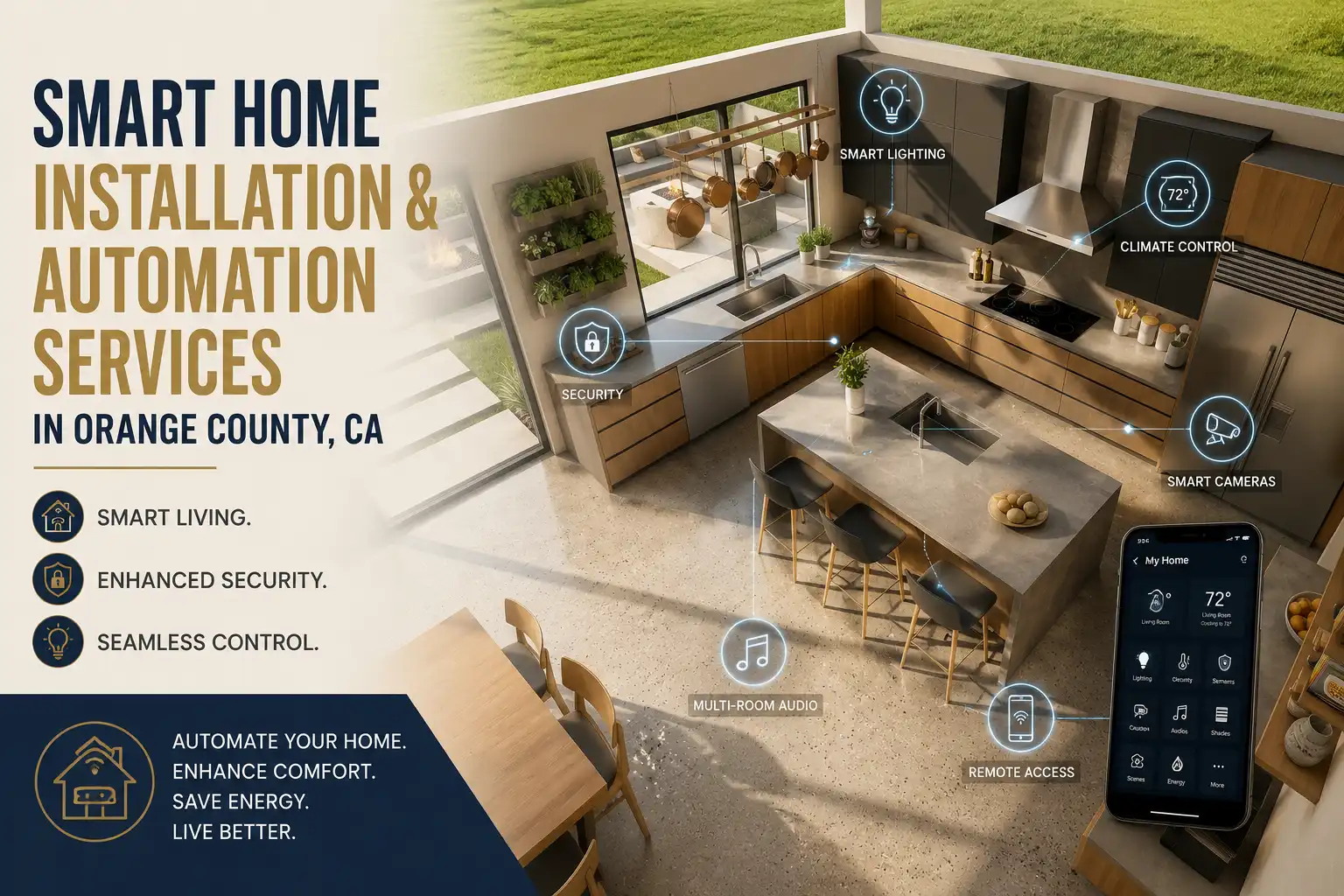
Smart home automation in Orange County, CA allows homeowners to create a connected living environment where lighting, climate control, security, entertainment, window shades, and entry systems work together. These features can be managed through a smartphone, tablet, wall-mounted interface, compatible voice assistant, or customized automation schedule.
With professional smart home installation and automation, technology can be selected and configured around the way your household actually uses the property. The objective is to create a system that feels convenient and intuitive instead of adding devices that are difficult to manage.
Create a Smarter and More Connected Orange County Home
Smart home technology can support many different homeowner priorities. Some households want stronger security and remote monitoring. Others want easier control over lighting, indoor comfort, music, television, shades, or exterior access.
A coordinated system may allow several features to respond together. For example, a customized “Away” scene could turn off selected lights, adjust the thermostat, close motorized shades, secure compatible locks, and activate selected security settings.
An “Entertaining” scene might adjust interior and exterior lighting, activate music in common areas, set the desired temperature, and prepare outdoor living spaces. These routines can be customized according to the home and homeowner’s preferences.
Smart Home Technologies You Can Integrate
Automated Interior and Exterior Lighting
Connected lighting systems make it possible to control brightness, groups of fixtures, schedules, and customized scenes. Homeowners can create different lighting environments for cooking, dining, entertaining, working, reading, or relaxing.
Outdoor lighting may also be scheduled around sunset, entry needs, security preferences, or landscape use. Sensors can help illuminate pathways, entrances, utility areas, and other selected spaces when movement is detected.
Smart Climate Control
Smart thermostats can simplify temperature management and allow homeowners to adjust compatible systems remotely. Personalized schedules may reduce unnecessary heating or cooling when parts of the property are not being used.
When appropriate equipment is available, the system may also support multiple climate zones, occupancy-based adjustments, or coordinated shade control.
Motorized Shades and Natural-Light Management
Automated shades provide convenient control over glare, privacy, natural light, and indoor comfort. Shades may be operated individually, grouped by room, or included in customized routines.
For homes with large windows and indoor-outdoor living areas, automated shades can support a consistent experience throughout the day without requiring every window covering to be adjusted manually.
Connected Security and Video Monitoring
Smart security options may include doorbell cameras, outdoor cameras, indoor cameras, motion detection, contact sensors, and mobile alerts. The system can be configured around the areas and activities the homeowner considers most important.
Professional camera planning should consider viewing angles, lighting conditions, privacy, internet connectivity, equipment power, recording preferences, and access permissions.
Smart Locks, Gates, and Entry Control
Connected access systems help homeowners manage doors and other compatible entry points. Temporary credentials may be useful for visiting relatives, household staff, contractors, or guests.
Homeowners may also be able to verify lock status, receive entry notifications, and remove access credentials without replacing a physical key.
Whole-Home Audio and Video
Integrated audio systems allow music and other content to be distributed across selected rooms and outdoor areas. Each zone may be controlled independently or grouped for entertaining.
Televisions, speakers, streaming devices, receivers, network equipment, and control systems should be coordinated so the technology remains visually organized and easy to use.
Smart Automation for Indoor-Outdoor Living
Many Orange County homeowners place significant value on patios, outdoor kitchens, pools, entertainment areas, and connections between interior and exterior living spaces. Smart automation can help coordinate these areas.
Selected features may include outdoor lighting scenes, speakers, televisions, security cameras, entry controls, automated shades, landscape lighting, and scheduled equipment operation.
These technologies should be selected for the installation environment. Equipment exposed to heat, moisture, direct sunlight, dust, or changing weather conditions requires appropriate placement and product specifications.
Planning Smart Technology During a Room Addition
A new bedroom, family room, home office, entertainment room, or primary suite provides an opportunity to extend the home’s technology infrastructure. Homeowners planning a room addition can address wiring, network access, lighting controls, security sensors, speakers, shades, and charging locations during construction.
This approach may produce a cleaner result because infrastructure can be incorporated before drywall, cabinetry, paint, flooring, and other finishes are completed.
The new space should also connect smoothly with the existing automation system. Device compatibility and network capacity should therefore be considered before the addition is finalized.
Visualize Your Smart Home with 3D Design
Home automation involves more than selecting electronic devices. Control panels, televisions, speakers, lighting fixtures, shades, cameras, and charging areas all affect the appearance and function of the space.
Using a professional 3D design service can help homeowners review the proposed room layout and determine where visible technology should be positioned. The design process may also help coordinate smart features with cabinetry, furniture, windows, doors, and architectural details.
Why Professional Planning Matters
Devices Need to Work Together
Smart home products may use different communication standards, applications, and control platforms. Selecting compatible equipment reduces confusion and supports a more coordinated experience.
The Network Must Support the System
Connected cameras, televisions, speakers, thermostats, locks, lighting controls, and other devices can place additional demand on the home network. Coverage and capacity should be evaluated before the complete system is installed.
Security Settings Require Attention
Remote access should be configured carefully. Strong credentials, updated software, appropriate permissions, secure network settings, and controlled access are important parts of a responsible installation.
Automation Should Remain Easy to Override
Schedules and routines should improve convenience without making the homeowner feel trapped by automation. Important features should remain easy to operate manually when needed.
The System Should Allow Future Expansion
Technology changes over time. A thoughtful design can provide flexibility for additional rooms, new equipment, expanded security coverage, or updated control platforms.
Our Smart Home Automation Process
Step 1: Discuss Your Priorities
The project begins by identifying the problems you want the technology to solve. This prevents unnecessary devices from being added without a practical purpose.
Step 2: Review the Property
The home layout, current equipment, network coverage, electrical conditions, construction plans, and desired control locations are evaluated.
Step 3: Develop an Integration Plan
A customized plan identifies suitable devices, installation methods, control options, automation routines, and infrastructure requirements.
Step 4: Install and Configure the System
Devices are positioned, connected, programmed, named, and organized according to the approved plan.
Step 5: Test and Explain the Controls
The connected features are tested individually and as part of automation routines. Homeowners receive guidance on everyday control, user access, essential settings, and system care.
Frequently Asked Questions
Can existing smart devices be integrated into a new system?
Possibly. Integration depends on each device’s platform, age, communication standard, condition, and compatibility with the proposed system.
Do I need to automate the entire home?
No. Many homeowners begin with specific priorities such as lighting, security, thermostats, locks, or entertainment and expand the system later.
Can multiple family members control the system?
Many platforms support multiple users. Access permissions can often be customized according to the household’s needs.
Can smart devices help manage energy use?
Automated lighting, thermostat schedules, occupancy settings, motorized shades, and remote controls may help reduce unnecessary operation. Actual results depend on the property, equipment, settings, and household behavior.
Plan Your Orange County Smart Home
Professional smart home automation in Orange County, CA can create a more comfortable, connected, and manageable home. The best results come from choosing practical features, building a reliable infrastructure, and organizing every device into a system that homeowners can understand and control.
Schedule a Smart Home Consultation
Explore additional design ideas, remodeling guides, and homeowner resources by visiting the Concierge Home Remodeling blog.